How a 3-person team moved from occasional posts to 90% video coverage of new listings
See how a small real estate team in Austin made video a standard part of every new listing, increasing video coverage from 40% to 90%. By turning listing photos and descriptions into short-form videos in minutes, the team scaled output and strengthened social engagement.
3 minute read
A small real estate team based in the United States was actively expanding its portfolio in a competitive suburban market in Austin, Texas. While the team understood the importance of social media in property promotion, it was using the less engaging static image formats for most of the posts. Videos were created occasionally, usually for high-priority listings or when time allowed. Similar to European experience, the majority of properties were presented through static images, limiting their visibility in increasingly crowded digital channels.
Challenge: Lack of a Repeatable Content Production Process
The core issue wasn’t awareness, but consistency. The team lacked a structured workflow to produce videos consistently across listings, resulting in 40% of new properties being covered with video content. Without a repeatable workflow and lack of staff, video production depended on availability, which made it unpredictable.
Solution: Standardizing Video Creation as Part of Every Listing
TensorShots for Real Estate allowed the team to shift from ad hoc content creation to a standardized process embedded into their weekly operations.
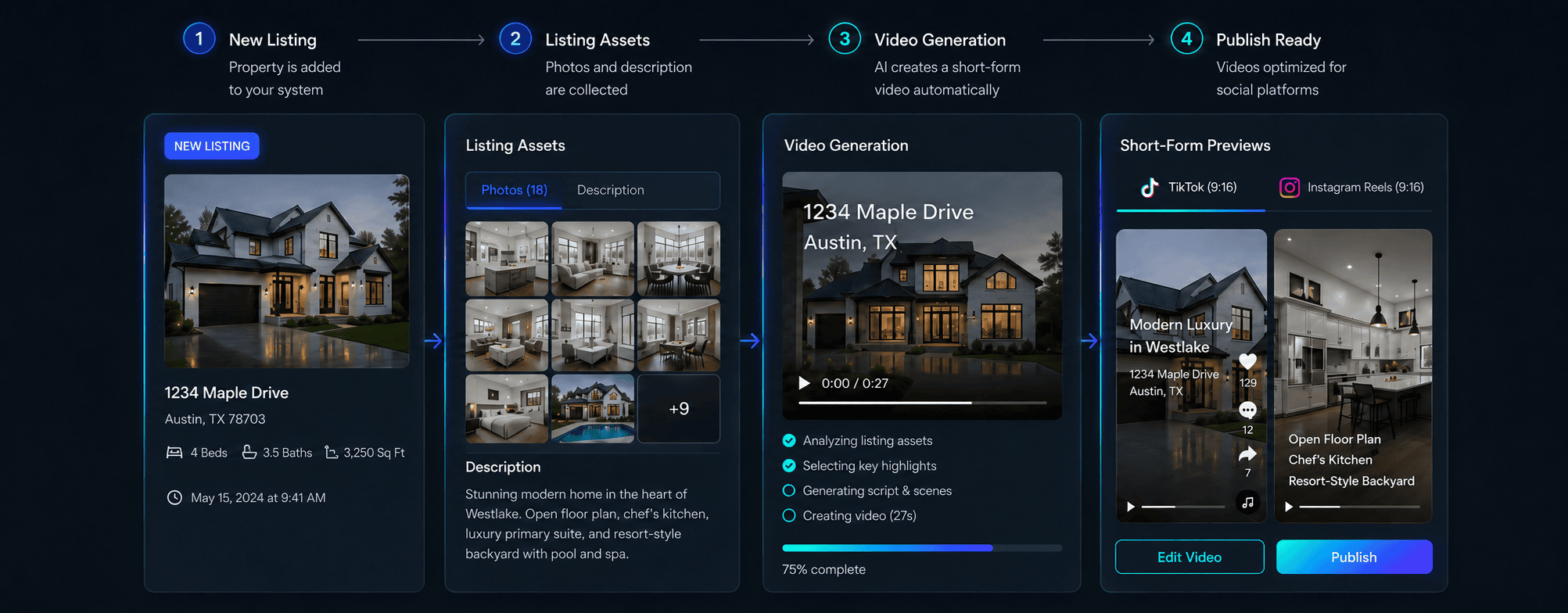
Each new listing became a trigger for video generation. Instead of deciding whether to create a video, the team integrated it as a default step. Listing photos and descriptions were transformed into short-form videos within minutes, allowing TensorShots to reduce manual editing and eliminate most of the repetitive video editing tasks.
“We knew that video worked, but we never had the time to do it consistently. TensorShots changed that. Now we can add videos to any listing without much effort.” — Jessica Miller, Lead Agent, Horizon Residential Realty
Results: Video Coverage Expanded to 90% of New Listings
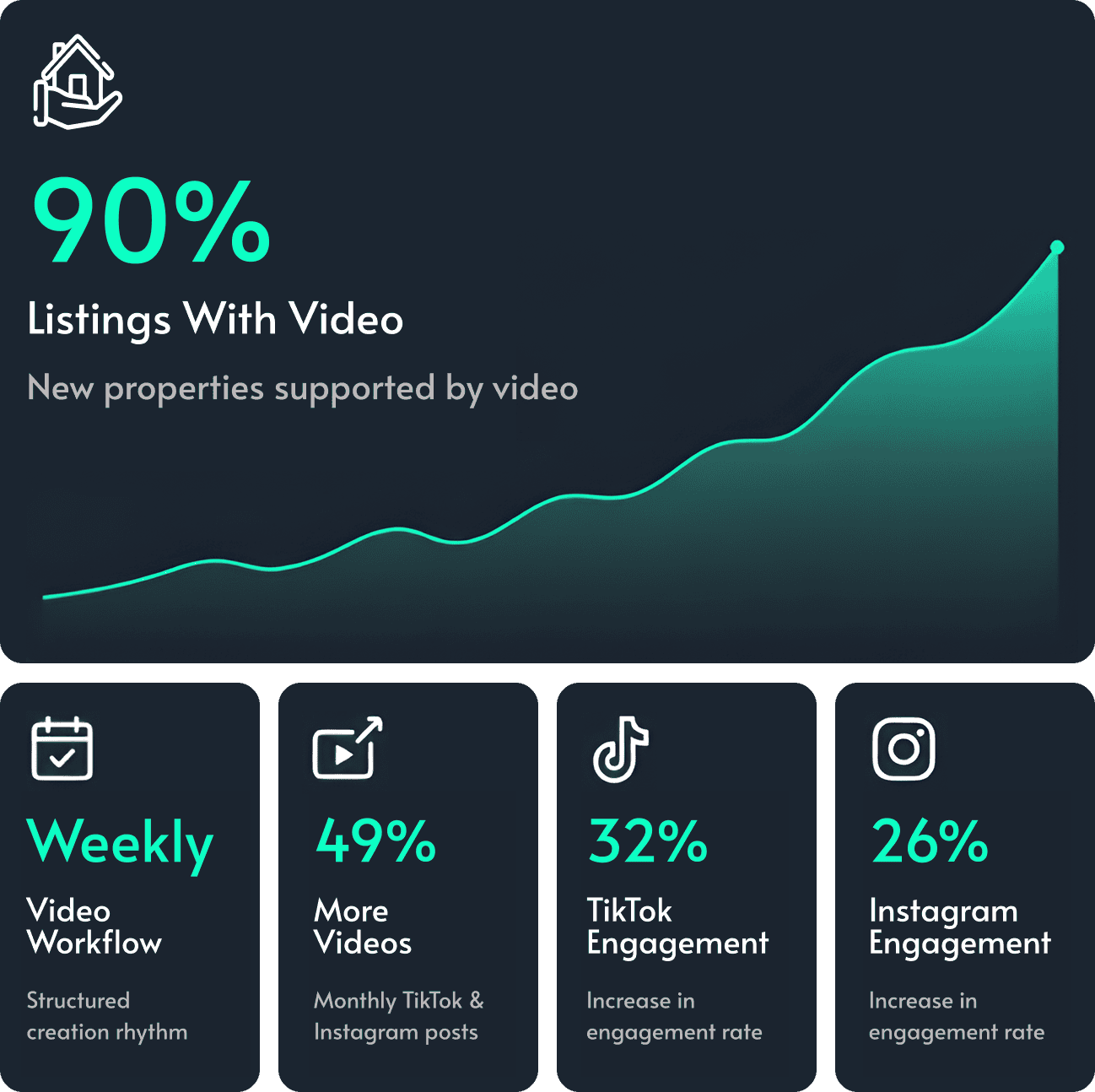
Within a short period, the team transitioned from irregular posting to a structured weekly workflow. Video content became part of nearly every listing, with 90% of new properties supported by video. The shift established a predictable video creation rhythm. As it became more cost-efficient, the team moved from sporadic exposure to a consistent presence across social platforms. The total number of monthly created and posted videos on TikTok and Instagram increased 49%, while post engagement rates rose by roughly 32% on TikTok and 26% on Instagram.
Conclusion
The transition from occasional video production to a repeatable workflow redefined how the team approached listing promotion. Instead of treating video as an optional enhancement, it became a standard component of every listing. This shift enabled the team to scale visibility, maintain consistency, and compete more effectively in a video-first market.