Best real estate video examples: What actually makes them work
Explore the best real estate video examples and learn what makes listing videos, agent videos, and social clips more effective.
21 minute read
Clean footage matters, but it isn’t the deciding factor.
In most cases, what separates strong real estate video examples from forgettable ones is message, structure, and purpose. The viewer needs to understand why the video exists and what they should take away from it within seconds.
Below are the main real estate video example types worth studying, plus what makes each one effective.
What the best real estate video examples have in common
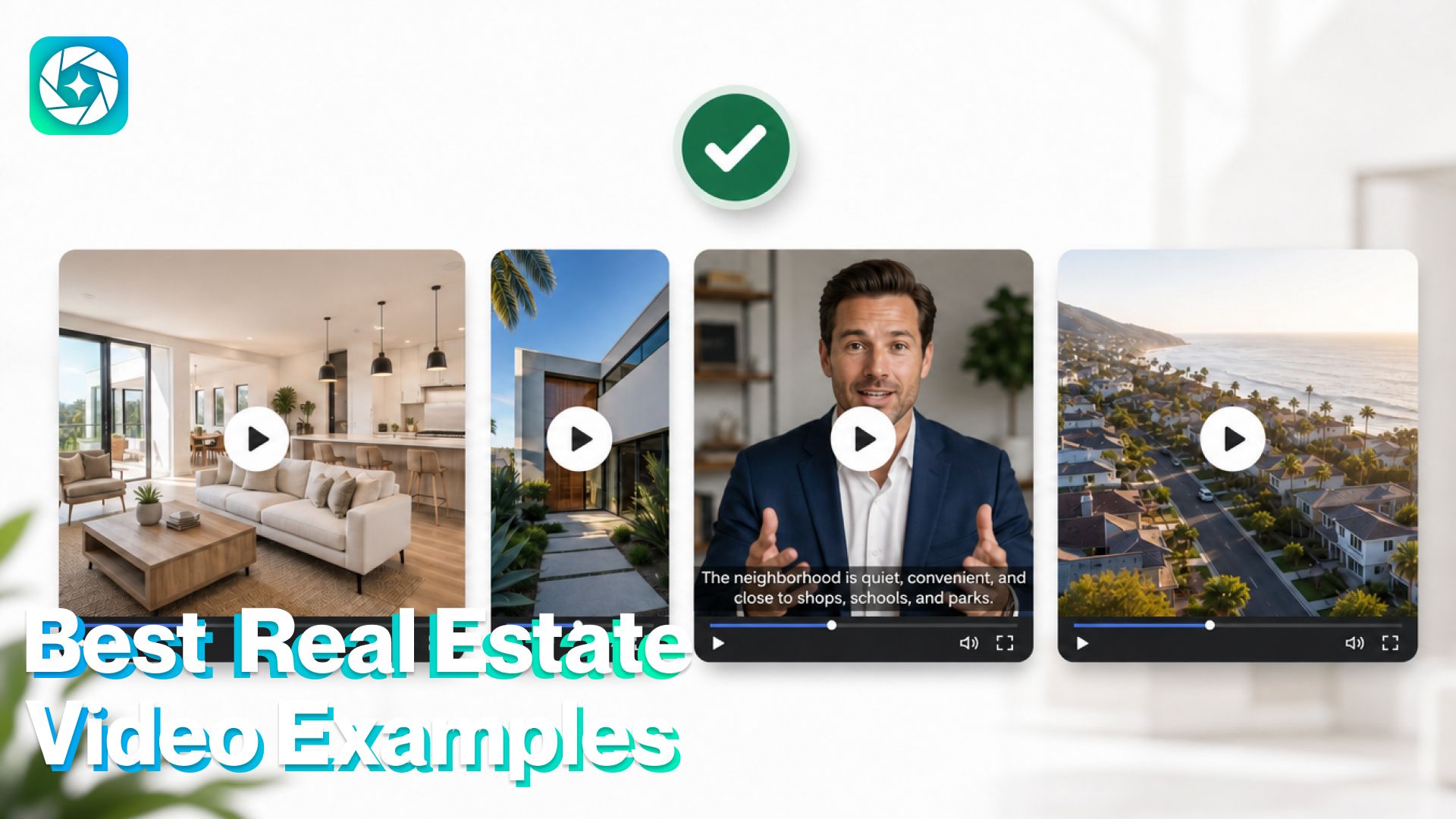
The strongest real estate video examples usually share a few traits.
Clear point
They do not try to show everything at once. They decide what matters most and build around that.
Use the format well
A listing walkthrough, a short social reel, an agent explainer, and a neighborhood highlight should not all feel the same. Strong videos match the structure to the platform and the audience.
Make the next step obvious
The viewer should know whether the goal is to book a showing, learn more about the listing, remember the agent, or engage with the content.
Feel intentional
The pacing, shots, captions, and script all support the same outcome. Weak videos often look fine on the surface but feel disconnected underneath.
That is the baseline to use when evaluating real estate marketing video examples. Good visuals help, but clarity and purpose are what make the content perform.
Example type 1: The listing video that sells the experience
This format works especially well for homes with strong layout, natural light, outdoor transitions, or premium design features. Instead of documenting every room equally, the video makes selective choices. It lets the strongest selling points carry the experience.
| Script | A waterfront listing video opens with a slow exterior shot from the backyard, then moves through the kitchen, living room, and primary suite before ending on the patio at sunset. The video doesn’t show every closet or hallway. It focuses on the parts of the home that create the strongest emotional pull: light, flow, outdoor space, and lifestyle. |
|---|---|
| What happens in the video example | The viewer sees how the main living spaces connect and why the property feels different from a standard listing. |
| Why it works | The video creates a sense of place instead of acting like a room-by-room inventory. It helps buyers remember the home for a specific reason. |
| What agents can copy | Choose the three strongest selling points before editing starts, then build the video around those moments instead of trying to include everything. |
What makes this type effective is discipline. The video isn’t trying to become a catalog. It is creating a sense of the property that static images alone cannot fully provide.
Example type 2: The short social video that stops the scroll
In a short reel or vertical clip, there is no time for a slow build. The hook has to land fast.
The best examples usually do one thing well. They open with a strong line, a surprising detail, a hyperlocal insight, or a visually striking feature. From there, they stay focused
| Script | A 20-second vertical reel opens with the line, “This is what $725,000 buys you five minutes from downtown.” The first shot shows the most visually interesting features, such as a renovated kitchen, rooftop view, backyard setup, or unusual floor plan. The rest of the clip moves quickly through three details and ends with a simple prompt to view the full listing. |
|---|---|
| What happens in the video example | The viewer gets a fast reason to care, a quick look at the strongest features, and a clear next step. |
| Why it works | The hook gives context immediately. The video doesn’t depend on slow cinematic pacing, because the platform rewards speed and clarity. |
| What agents can copy | Start with a specific hook, keep the edit tight, and make sure every shot supports one simple idea. |
This format works because real estate social video isn’t only about the listing. It is about attention. A good short-form video makes the viewer stop, understand the point, and connect the content back to the agent or property.
Example type 3: The agent-led video that builds trust
These work because they position the agent as useful.
| Script | An agent films a short video explaining why a home was priced slightly below nearby active listings. Instead of saying the price is “competitive,” the agent walks through buyer demand, recent comparable sales, condition differences, and the strategy for attracting stronger early interest. |
|---|---|
| What happens in the video example | The agent explains a real decision that affects the seller’s outcome. |
| Why it works | The video builds trust because it shows judgment. Viewers see how the agent thinks, not just how the agent promotes themselves. |
| What agents can copy | Use agent-led videos to explain decisions buyers and sellers already care about, such as pricing, preparation, staging, negotiation, neighborhood demand, or marketing strategy. |
For sellers, this type of content can be especially persuasive. A homeowner deciding between agents often wants evidence of strategy, not just visibility. An agent who can explain how a listing should be positioned, how media should be used, or how a neighborhood should be marketed tends to feel more credible.
Example type 4: The neighborhood or lifestyle video
Neighborhood-focused videos are another format agents should study more carefully. These are often overlooked in favor of property content, but they can be highly effective because they help buyers understand context.
| Script | A neighborhood video follows a simple buyer-focused route: the main street, a local coffee shop, a park, the nearest grocery option, and the commute path to a major employment area. The agent adds short captions that explain who the neighborhood fits best, such as first-time buyers, commuters, families, or downsizers. |
|---|---|
| What happens in the video example | The viewer gets a practical feel for daily life in the area, not just a highlight reel of attractive shots. |
| Why it works | Buyers are not only choosing a property. They are choosing the routine around it. This type of video helps them understand whether the location fits their life. |
| What agents can copy | Focus on useful local context instead of generic lifestyle footage. Show the details that help buyers make a decision. |
The strongest examples avoid generic tourism language. They focus on practical value. Walkability, commute logic, school access, local patterns, vibe, and buyer fit all matter more than broad descriptions.
What weak real estate videos usually get wrong
Studying bad examples is useful too. Most weak real estate video examples fail for one of three reasons.
Lack of focus: The video tries to include too much, so nothing stands out.
Generic messaging: The script relies on empty phrases instead of saying something specific about the property, the market, or the audience.
General mismatch: A fast, flashy style may not suit a serious listing. A polished cinematic approach may not work for a practical social video. The format has to fit the goal.
How to learn from the best real estate video examples
The smartest way to use examples isn’t to copy them directly. It is to break down what job they are doing well.
Ask what the hook is. Ask what the core point is. Ask what kind of viewer the video is designed for. Ask what makes the next step feel natural.
If you do that consistently, the value of real estate video examples becomes much clearer. You stop copying style and start understanding strategy.
Final thoughts
The best real estate video examples work because they are built with intent. They know what the viewer needs to understand, what the property or agent needs to communicate, and what action should follow.
The goal isn’t just to make something that looks good. The goal is to make something that captures immediate attention.