Daylight vs twilight real estate videos: Which one works better for your listing?
Compare daylight vs twilight real estate videos and learn when each style works best for listings, curb appeal, luxury positioning, and buyer engagement.
6 minute read
Choosing between daylight and twilight real estate videos isn’t just a visual decision. It is a marketing decision.
The time of day changes how a property feels, which features stand out, and what kind of buyer response the video is likely to create.
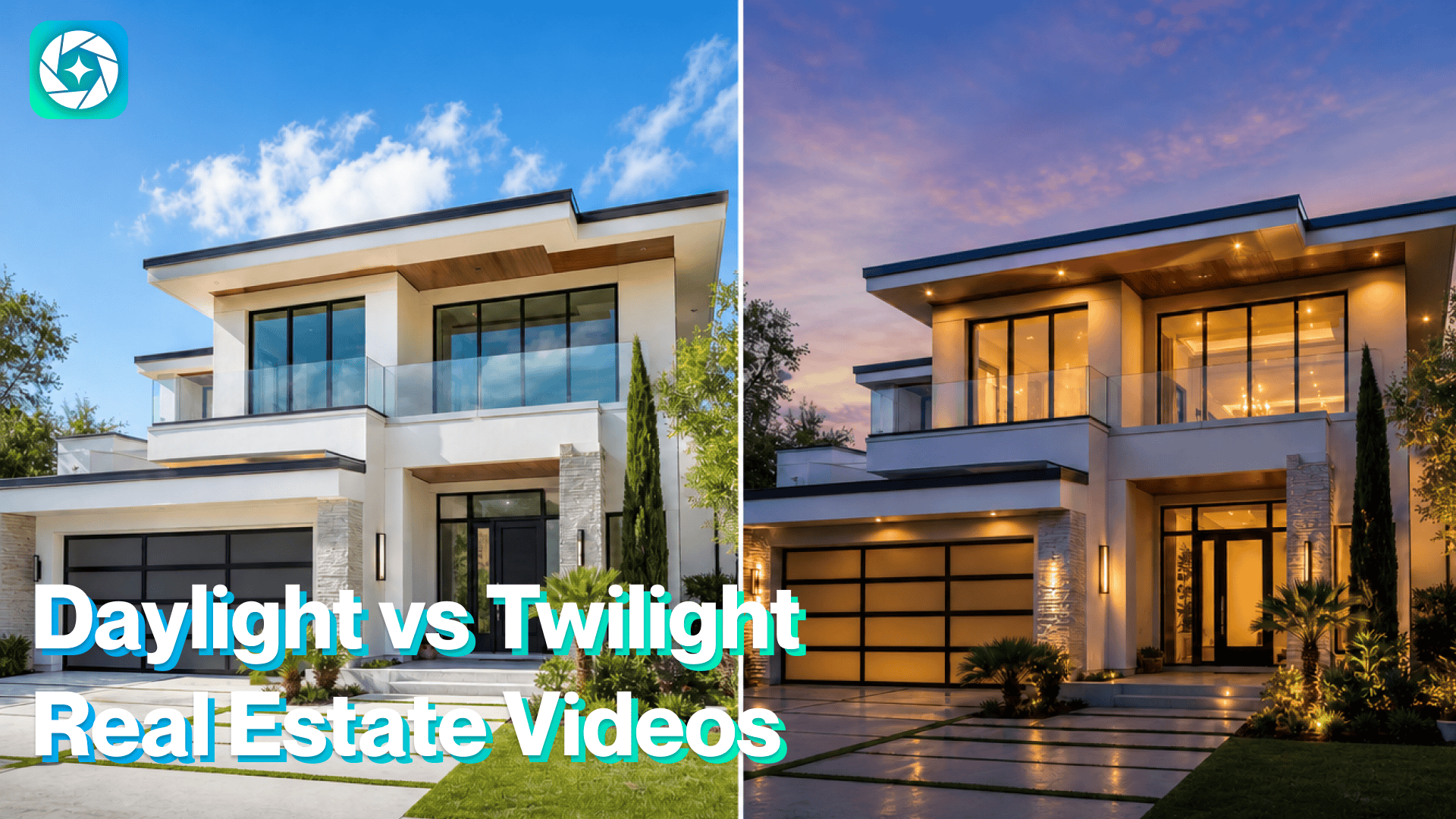
Agents often treat daylight and twilight as style preferences, but the better question is what the video needs to accomplish. Daylight usually helps buyers understand the home clearly. Twilight helps a listing feel more elevated, emotional, and memorable.
If you want a smarter real estate video strategy, stop treating daylight and twilight as interchangeable options. They are different tools, and the strongest listings use the one that best supports the home’s selling angle.
Why the choice matters more than most agents think
Most buyers won’t analyze a listing video in technical terms, but they react to it immediately. A video sets expectations fast. It tells the viewer whether the home feels practical, dramatic, elevated, modern, cozy, or premium. That emotional framing affects how the listing is remembered.
This matters because a real estate video is rarely just about helping one buyer understand one property. It also signals how the agent markets homes. Sellers notice the difference between standard presentation and deliberate presentation. A smart video choice between the daylight or twilight atmosphere can improve not only listing engagement, but also your perceived value in future listing conversations.
What a daytime vs twilight video does best
Daylight video:
- Bright interiors
- Layout and room flow
- Family homes
- Land, views, and neighborhood context
- Practical buyer evaluation
- Faster production timelines
Twilight video is best for:
- Luxury listings
- Strong curb appeal
- Pools, patios, and outdoor entertaining areas
- Architectural exteriors
- Landscape or accent lighting
- Social media scroll-stopping visuals
When daylight usually wins
Daylight usually wins when the listing needs clarity more than drama. A home with a strong floor plan, bright interior, renovated kitchen, useful family spaces, or a compelling view often performs better when those strengths are visible without stylistic framing.
If the video is meant to help a buyer assess the property seriously, a daylight real estate video can feel more direct and trustworthy.
Daylight also makes sense when the listing budget needs to stay efficient. Not every property requires premium styling. A good real estate curb appeal video shot in strong daylight can still look polished, professional, and effective.
When twilight usually wins
For example, a suburban family home with an open kitchen, bright living area, and large backyard may benefit more from daylight because buyers need to understand the space.
A modern luxury home with landscape lighting, a pool, glass walls, and a dramatic exterior may benefit more from twilight because the emotional impact is part of the value.
A listing with both strengths may need a hybrid approach: daylight for interiors and twilight for exterior hero shots.
The best real estate video marketing choice is the one that matches the property
The right question is which format tells the truth about the property in the most persuasive way.
If the listing’s value is practical, spacious, bright, or layout-driven, daylight often wins. If the listing’s value is emotional, architectural, luxury-oriented, or exterior-led, twilight often wins.
| IF LISTING VALUES ARE... | |
|---|---|
| Practical | Emotional |
| Spatious | Architectural |
| Bright | Luxury-oriented |
| Layout-driven | Exterior-led |
| DAYLIGHT VIDEO | TWILIGHT VIDEO |
That is the core decision inside good real estate video marketing. You aren’t choosing a mood at random. You are matching the presentation style to the property’s strongest sales angle.
But in some cases the good approach is a hybrid one. A listing may benefit from daylight interior footage and twilight exterior highlights. That combination can work especially well when the home has strong flow inside and premium curb appeal outside.
What agents should avoid
The biggest mistake is using twilight just because it feels upscale.
If the home doesn’t support that look, the video may feel exaggerated. Buyers notice when the presentation oversells the product.
Another mistake is using daylight footage that feels flat because no effort went into composition, pacing, or message. Daylight isn’t the same as ordinary. A daytime real estate video still needs structure and purpose.
Conclusion
Daylight vs twilight real estate videos isn’t a debate with one winner. It is a positioning choice. Daylight is usually better for clarity, functionality, and honest presentation. Twilight is usually better for mood, luxury, and standout curb appeal.
The best real estate video strategy is to choose the version that highlights the property’s strongest advantage and supports the kind of response you want from buyers and sellers. Before planning the shoot, identify the listing’s strongest sales angle first. Then choose the video style that makes that advantage easiest to see, feel, and remember.