Office-to-residential conversion: How video can help buyers see the future
Learn how listing videos can promote office-to-residential conversion projects by showing livability, location, layout, and the story behind adaptive reuse.
6 minute read
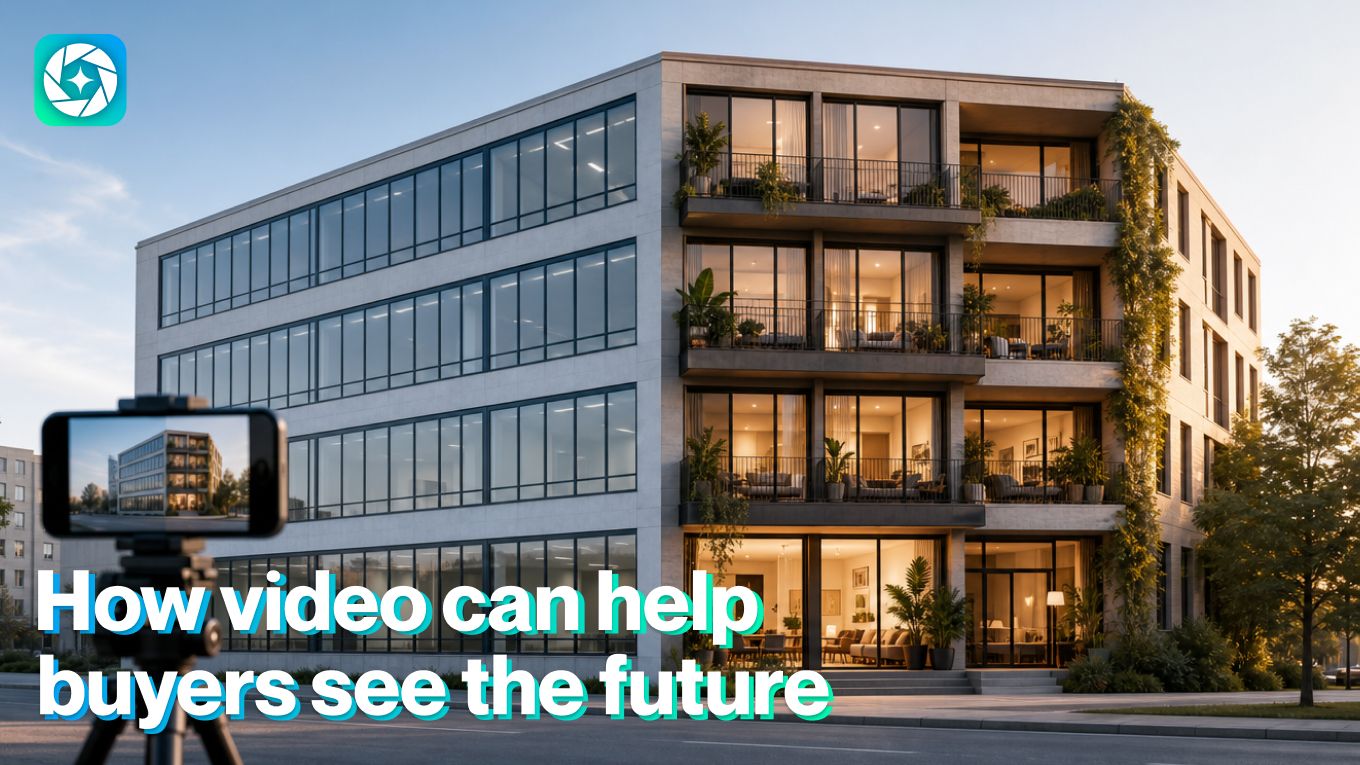
An empty office building can look cold, dated, and hard to understand. A finished residential conversion can become apartments, lofts, mixed-use housing, or a new anchor for a downtown block. The hard part is helping buyers, renters, investors, and local stakeholders see that future before the building fully explains itself.
That is where listing video matters.
Why office-to-residential conversion is getting more attention
Cities are trying to solve two problems at once: underused office space and demand for more housing.
Office-to-residential conversion, also called adaptive reuse, gives owners and developers a way to turn commercial buildings into residential supply without starting from an empty lot.
Conversions depend on practical issues like floor plate depth, ceiling height, windows, parking, transit access, building codes, and financing. Brookings have also pointed out that office conversions work better in some markets and building types than others.
A weak listing treats a conversion like any other property. A strong listing explains why the conversion makes sense, who it serves, and what kind of lifestyle the building can support.
What video can show that photos miss
For office-to-residential listings, video should do more than pan across rooms. It should translate the conversion.
Context
Show the exterior, the surrounding block, nearby transit, restaurants, parks, grocery options, or workplace access. Many conversion projects are strongest because of location. If the building sits in a walkable area, the video should make that obvious in the first few seconds.
Arrival experience
A converted building needs to prove that it no longer feels like an office. The lobby, elevators, corridors, signage, lighting, and amenity spaces should be filmed with that concern in mind.
Livability
Show where the bed fits. Show how the kitchen connects to the living area. Show the view from the window. Show how light moves through the room. If the unit has quirks from the original office layout, do not hide them. Frame them as tradeoffs and show how the space works.
A strong office-to-residential listing video should always avoid being just another moving slideshow.
What to include in an office-to-residential conversion video
A strong office-to-residential conversion video should be planned like a guided walkthrough where each shot answers a question the viewer is likely to have about the building’s future use
| Shot | Purpose | Why it matters |
|---|---|---|
| Exterior and surrounding block | Show where the building sits and what the area feels like | Many conversion projects depend on location. Buyers and renters need to understand walkability, transit access, nearby restaurants, parks, offices, and daily convenience. |
| Street-to-entry sequence | Show how someone approaches and enters the building | A former office building has to feel approachable as a residential property. The entry sequence helps viewers understand whether the building feels welcoming, safe, and usable. |
| Lobby and common areas | Show whether the building now feels residential | The lobby, corridors, elevators, lighting, signage, and shared spaces help prove that the conversion is more than a unit-level renovation. |
| Unit walkthrough | Show flow, scale, and how the layout works | Converted office spaces can have unusual layouts. Video helps viewers understand how the kitchen, living area, bedroom, and windows relate to each other. |
| Natural light and window views | Show how the space feels during daily use | Light is one of the biggest questions in office conversion apartments. Show real window placement, views, and brightness instead of relying only on edited still photos. |
| Furniture placement or staged layout | Show how someone could actually live in the space | Buyers and renters need to see where a bed, sofa, table, or work area can fit. This is especially important when the original office layout creates quirks. |
| Amenity spaces | Show lifestyle and shared value | Lounges, fitness rooms, rooftops, coworking areas, bike storage, and laundry spaces can make the building feel more complete as housing. |
| Before-and-after or future-state visuals | Show the transformation from office use to residential use | Conversion projects often need help explaining the change. Use renderings, staged footage, or before-and-after edits clearly, and label anything that is not current footage. |
| Neighborhood context | Connect the building to daily life | Show grocery options, transit, coffee shops, parks, restaurants, and work access. This helps the viewer picture the routine around the home, not just the unit itself. |
| Clear closing shot and CTA | Tell the viewer what to do next | End with the most relevant next step: schedule a tour, view available units, request floor plans, contact the listing team, or learn more about the conversion project. |
The goal isn’t to make the project look finished if it is not finished. The goal is to make the future easier to understand while keeping the current reality clear.
Use video to promote the bigger story, not just the unit
Office-to-residential conversion often has a public-facing story. It can mean more housing downtown, more evening foot traffic for local businesses, better use of existing buildings, and a new life for areas that lost daily office activity.
A good video can serve all of those audiences, as long as each version is edited for the channel.
What to avoid in office-to-residential listing videos
Don’t make the video too abstract. Drone shots and skyline clips can help, but they cannot replace the unit, the building, and the daily-life details.
Don’t hide awkward constraints. If a layout is unusual, show how furniture fits. If some units get better light than others, make the footage accurate. If amenities are still under construction, label renderings or future-state visuals clearly.
Don’t overpromise. Conversion projects already require trust. Misleading visuals can damage that trust quickly.
Finally, don’t make the video feel like a generic luxury apartment ad unless the property truly supports that positioning.
Final thoughts
Office-to-residential conversion isn’t the answer for every empty office building. Some properties are too deep, too expensive, too poorly located, or too difficult to adapt. But when the building works, the marketing needs to do more than list features.
Video helps because it shows the transformation in a way buyers and renters can feel. It turns a former office into a possible home. It turns a complicated development story into a simple question: “Can I see myself living here?”