Real estate drone photography and video: When it’s worth the cost
Learn when real estate drone photography and video are worth the cost, what shots to capture, and how much aerial media costs.
7 minute read
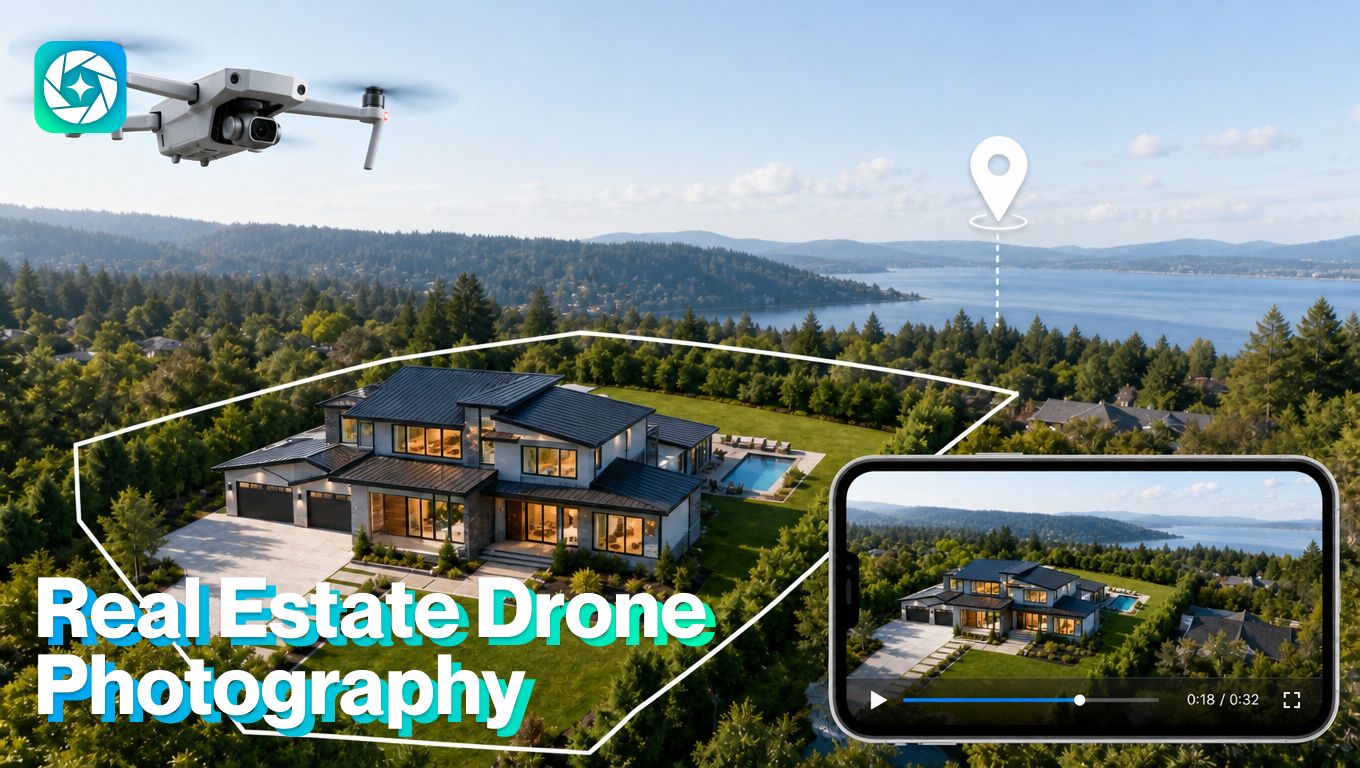
Real estate drone photography and video can make a listing feel bigger, clearer, and more valuable. But aerial content only works when it shows something buyers can’t understand from the ground.
This guide covers everything you need to know about real estate drone photography and video in 2026: FAA requirements, costs, equipment choices, and how to convert your aerial shots into marketing content that actually moves listings.
When drone media is worth the cost
Drone photography and video are worth it when the aerial view explains something important about the property. If the drone only adds a dramatic angle without useful information, the budget may be better spent on stronger interior photos, listing video, staging, or social edits.
| Property type | Drone worth it? | Why | Best shot |
|---|---|---|---|
| Acreage, farms, or large lots | Yes | Buyers need to understand scale, boundaries, land use, and privacy | High-angle lot view or slow pull-away |
| Waterfront, mountain, or city-view homes | Yes | The view is part of the property’s value | Reveal from the home toward the view |
| Large backyard, pool, garden, or outdoor kitchen | Yes | Aerials show how outdoor features connect to the home | Angled backyard shot or outdoor-living orbit |
| Luxury listings | Often | Drone media can support premium positioning when the exterior, setting, or arrival experience matters | Cinematic driveway approach or exterior reveal |
| New construction or developments | Yes | Drone footage can show site scale, roads, amenities, progress, and nearby context | Site overview or neighborhood approach |
| Standard suburban home on a small lot | Sometimes | Worth it only if curb appeal, lot position, roofline, or neighborhood context adds value | Clean front exterior reveal |
| Dense urban condo with no view | Usually no | Drone footage may not show anything buyers need to understand | Use street-level context or building entrance shots instead |
| Interior-focused listing | Usually no | If the value is mainly layout, finishes, or renovation quality, interior media matters more | Use interior walkthrough, detail shots, or listing video |
When drone photography makes sense
Drone photography is most valuable when the property’s selling point extends beyond the interior. It works well for homes with acreage, waterfront access, mountain or city views, large yards, pools, gardens, long driveways, guest houses, detached structures, or strong neighborhood positioning.
Drone photos show scale. Drone video shows movement and context.
It also helps when a listing needs context. A buyer may not understand from ground photos that the home backs onto a park, sits near the beach, has privacy from neighbors, or offers a better lot than competing homes.
When drone video adds more than photos
A photo can show a property near the water. A video can show the path from the backyard to the dock.
Drone photos show scale. Drone video shows movement and context.
Drone video is especially useful for luxury homes, estates, land listings, new construction communities, commercial properties, vacation homes, and neighborhood marketing.
For most residential listings, keep drone video short. A clean aerial opener, one exterior reveal, and one neighborhood context clip are usually enough. Buyers still need to see the kitchen, living space, bedrooms, bathrooms, and layout.
How much real estate drone photography costs
Drone pricing depends on the market, property size, shoot complexity, pilot experience, and whether you need photos, video, or both. Use these ranges as planning guidance, not fixed pricing.
| Drone option | Typical cost range | What it usually includes | Best fit | What can raise the price |
|---|---|---|---|---|
| DIY drone setup | $800-$2,500 upfront | Drone, accessories, batteries, memory cards, registration or certification costs, and basic training | Agents or teams shooting enough listings to justify the time, learning curve, and compliance work | Better drone model, extra batteries, editing software, training, certification, insurance |
| Hired drone pilot | $150-$350 per standard residential session | Aerial photos or short aerial clips for one property | Agents who only need drone media occasionally | Travel, larger property, more flight time, airspace checks, weather delays, rush delivery |
| Photo and video package | $200-$500 when bundled | Aerial photos, short drone clips, and sometimes interior photography or listing video assets | Listings that need both aerial context and a broader media package | Multiple deliverables, vertical edits, branded versions, twilight timing, extra revisions |
| Larger estate, land, commercial, or custom shoot | $400-$600+ | More planning, more flight time, wider property coverage, aerial video, neighborhood context, or multiple export formats | Luxury listings, acreage, land, commercial properties, developments, and high-value launches | Travel, airspace authorization, complex shot list, multiple locations, advanced editing, licensing, extra approvals |
The cheapest option is not always the best one. A weak drone shot can make a property feel smaller, flatter, or less premium than it is. Pay for a clear shot plan, not just flight time.
What to capture on a drone shot list
A good drone shoot should be planned before the pilot arrives. Start with a hero exterior shot from a 30-to-45-degree angle. This usually gives the best mix of architecture, landscaping, driveway, roofline, and setting.
Capture a high-angle lot shot if the yard, pool, acreage, or outdoor layout matters. Use top-down shots carefully; they are useful for layout, but they rarely create emotion by themselves. Add a backyard or outdoor living shot. Patios, pools, gardens, docks, decks, and outdoor kitchens often sell better when buyers can see how they connect to the home.
Finish with one pull-away shot. This works well for social clips, listing videos, email previews, and open house promotions.
Where to use drone content
Use the strongest aerial image as the listing hero only when the exterior, lot, or view is a major selling point.
Listing reel
Use drone video as the first few seconds of a listing reel when it creates a better hook than an interior shot.
YouTube
When opening a full property tour and orient relocation buyers.
Instagram and TikTok
Use short drone reveals to show the strongest feature quickly.
Know the compliance basics
In the United States, drone work for real estate is commercial use. The FAA says small drones under 55 pounds used for work or business must follow Part 107 rules.
Commercial drone pilots need a Remote Pilot Certificate, and drones used under Part 107 must be registered. Some flights may also require airspace authorization, especially near airports or controlled airspace.
Night operations and flights near people or vehicles have specific requirements. Before hiring a drone operator, ask if they are Part 107 certified, insured, familiar with local airspace, and able to deliver both photo and video files.
Final takeaway
Real estate drone photography and video are worth it when they explain value that ground-level media cannot show. Use drone content for scale, setting, views, outdoor space, location, and neighborhood context. Skip it when it adds drama but no useful information.