Real estate virtual staging: When it works, when it backfires, and how to use it well
Learn when real estate virtual staging works best, how it compares with traditional staging, and how agents can use it without hurting buyer trust.
11 minute read
Real estate virtual staging has moved from a niche listing add-on to a mainstream marketing tool. That shift makes sense.
Agents need faster listing preparation, lower production costs, and better ways to help buyers understand empty or awkward spaces online. Virtual staging can solve all three.
If you want to use virtual staging well, the goal isn’t to make a room look impressive at any cost, but to help buyers imagine the space clearly.
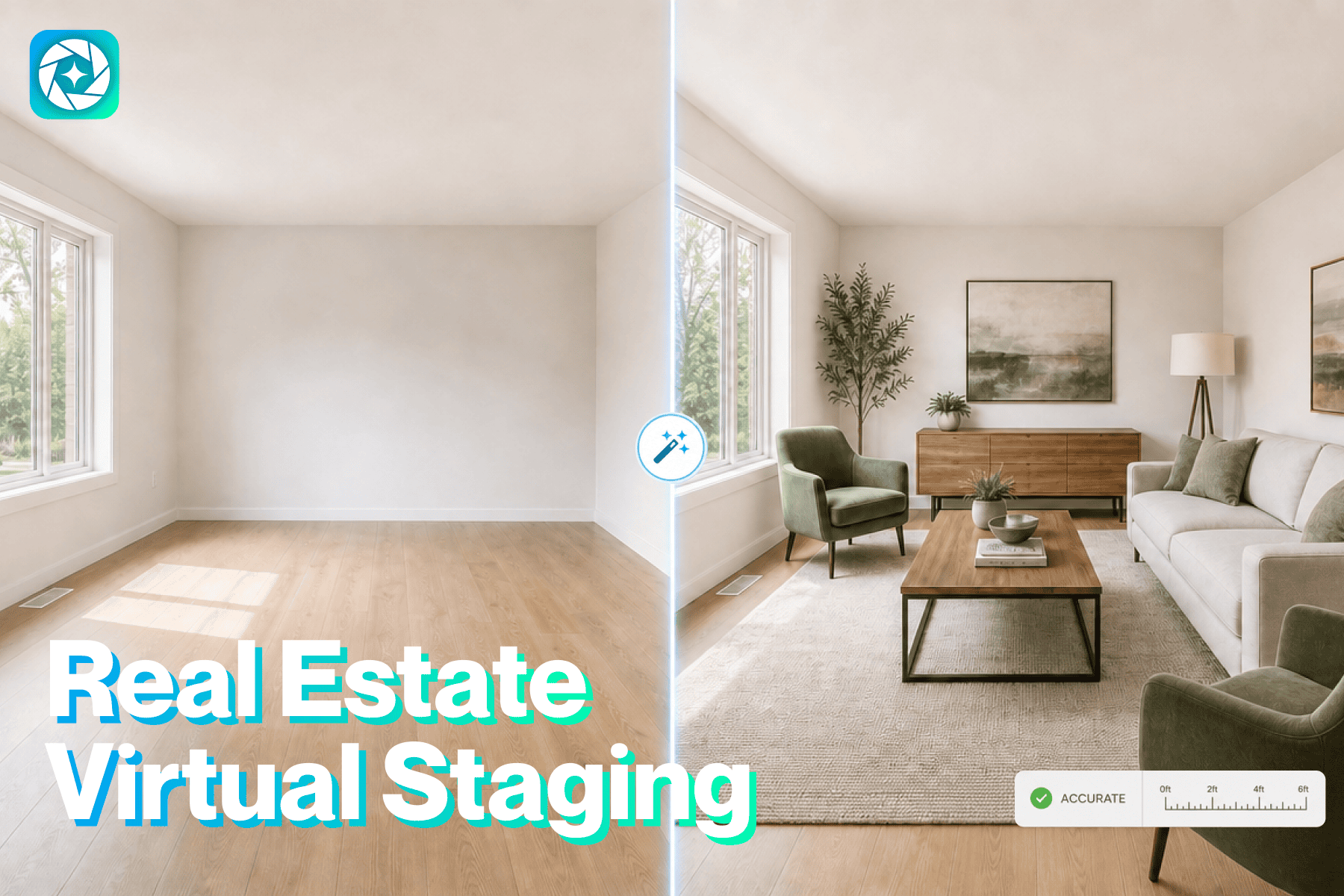
Why real estate virtual staging became so popular
The popularity of virtual staging isn’t hard to understand.
Traditional staging is expensive, slower to coordinate, and often unrealistic for average listings. In reality some sellers don’t want to move furniture or rent furniture.
The friction starts as agents still need the listing to look strong online, and this is where digital staging fills the gap. A clean, believable staging concept helps solve that. It gives the room context, and improves the first impression of the listing online.
What good virtual staging actually does
The best real estate virtual staging is subtle. It doesn’t try to shock the viewer, but to clarify the space.
Strong staging should help the buyer imagine living in the home. It shouldn’t create a version of the property that disappears the moment someone walks through the door.
This is where AI virtual staging tools for real estate have changed the workflow. Agents and photographers can now produce staged concepts much faster than before.
For example, a vacant condo may work best with compact furniture, clean lines, and a layout that shows how the main living area can function without feeling crowded.
A dated suburban living room may benefit from warmer decor, updated furniture, and better visual balance, while still showing the actual floors, windows, fireplace, built-ins, and room shape.
A luxury listing may require a different decision. If the property’s value depends heavily on premium finishes, scale, and in-person presentation, physical staging may be worth the cost.
Virtual staging vs Traditional staging
The wrong way to frame this is as a fight with one universal winner. Virtual staging vs traditional staging depends on the property, the budget, and the role the media needs to play.
Traditional staging
Works when the home is high-value, seller-occupied but clean, and likely to benefit from in-person showings. The environment needs to match the marketing exactly. It also works well when sellers expect a premium presentation and the budget supports it.
Virtual staging
Wins when speed matters, the property is vacant, the home is mid-market, or the listing needs a strong online presentation without the logistics and cost of furnishing the space physically.
When to use virtual staging and when to avoid it
Virtual staging works best when it helps buyers understand a room more clearly. It becomes risky when it hides problems, changes expectations, or makes the property feel different from the home they will see in person.
Use this decision framework before choosing which rooms to stage.
| SITUATION | USE VRITUAL STAGING? | WHY | WATCH OUT FOR |
|---|---|---|---|
| Vacant homes | Yes | Empty rooms often feel smaller, colder, and harder to understand online. | Keep furniture scale realistic and include at least one unstaged image so buyers understand the room’s actual condition. |
| Luxury listings | Sometimes | High-end homes may benefit from polished presentation, but buyers also expect accuracy and premium execution | If the listing depends heavily on in-person impact, traditional staging may be stronger. |
| Outdated but clean rooms | Yes | Staging can help buyers see potential without requiring a full renovation before listing. | Don’tt hide outdated finishes, flooring, windows, or built-in features. |
| Occupied homes | No | If the home already has furniture, virtual staging may create confusion. | Avoid replacing real furniture in a way that makes showings feel misleading. |
| Awkward layouts | Yes | Virtual staging can show how a difficult room might function, such as a narrow living area or small bedroom. | Don’t force an unrealistic layout. |
| Rooms needing renovation | No | If the room needs major repairs or updates, staging may distract from the real issue. | Don’t use staging to cover damage, poor condition, or needed work. |
Where real estate virtual staging creates the most value
The biggest return usually comes from vacant listings. Virtual staging for empty homes helps solve a specific conversion problem. Buyers tend to move on from photos that feel sterile or hard to interpret.
When the room is staged well, the listing becomes easier to understand and easier to remember. There is also a content advantage. Strong staged images can feed social posts, listing pages, email campaigns, and promotional graphics.
But let’s not forget older homes that need context adding value. A dated but clean room may not inspire a buyer on its own. Staging can help show how the room could feel in a more modern way.
Agents also get value from using staged imagery in listing presentations and marketing proposals. Virtual staging for real estate agents isn’t only about this listing. It is also about showing prospective sellers how you think about positioning and presentation.
Once you have decided that virtual staging is appropriate for the listing, follow our practical guide to creating AI-staged real estate photos and turning them into property videos.
Where it goes definitely wrong
The biggest risk is overediting. If the furniture scale is wrong, if the room is brighter than reality, or if the edit implies upgrades the property does not have, the buyer may feel misled.
Trust issue
Recent NAR coverage has emphasized that staging works best when it helps clarify a property rather than replace reality. That is the standard agents should follow. Use staging to interpret the room, not to invent it.
Poor style matching
A staged image can look technically polished and still be strategically wrong. Ultra-modern furniture in a traditional suburban listing, or overly ornate staging in a compact condo, can make the home feel less coherent.
Sameness
Many AI virtual staging real estate tools generate clean but generic results. If every room looks like the same template, the listing starts to feel artificial. Buyers probably won’t mention that explicitly, but they notice when the design feels detached from the home.
How to keep virtual staging honest
Virtual staging should help buyers understand the property, not make them question what is real. The safest approach is to treat every staged image as a marketing aid that needs clear context.
Always label virtually staged images clearly wherever they appear, including listing pages, social posts, brochures, and email campaigns. Buyers should not have to guess whether the furniture, decor, or styling is real.
Include unstaged photos as well, especially for the main rooms you virtually stage. A staged image can show possibility, but the original photo shows the actual condition of the space.
Final thoughts
Virtual staging helps a buyer understand a home faster and helps a seller see that your marketing is thoughtful. It is a presentation tool.
For most agents, the real opportunity is practical. Use virtual staging for real estate where it improves clarity, reduces listing friction, and creates better first impressions online.