How new real estate agents get leads in their first year
Learn how new real estate agents get leads using local content, video, open houses, better follow-up, and practical lead generation strategies that work.
6 minute read
If you are trying to figure out how new real estate agents get leads, the first thing to understand is this: they don’t fail because there are no leads available.
You may be licensed, motivated, and ready to work, but still feel like nobody knows you, nobody is calling, and every experienced agent already owns the market. That is where a lot of new agents get stuck. They assume they need a huge budget, a massive social following, or instant referrals to get traction.
This guide breaks down what actually helps new agents create early conversations, build local credibility, and turn loose interest into a real pipeline.
Why new agents struggle with leads early
A fresh real estate agent's lead problem is rarely just a traffic problem. More likely a trust problem. Buyers and sellers don’t know you yet, and without a track record, they need stronger signals before they respond.
That is why new agents cannot rely on passive branding alone. A nice headshot, a brokerage page, and a few social posts are not enough. People need to see relevance, competence, and consistency. They need to feel that you know the market, understand the process, and will actually follow through.
Start with conversations, not with complicated funnels
Early on, your main goal is to create more real estate-related conversations with people who could either become clients or refer clients. That means talking to your sphere in a more intentional way.
New agents make the mistake of announcing that they are licensed once, then waiting for inbound business. That is too passive. What works better is staying visible around useful local topics. Share what is happening in the market, what buyers are struggling with, what sellers are getting wrong, and what neighborhoods people should watch.
A simple weekly lead plan for new agents
New agents don’t need a complicated lead system in the first year. They need a repeatable weekly rhythm that creates conversations, builds visibility, and keeps follow-up from slipping.
Start with sphere outreach. Each week, contact 10 to 15 people you already know. Don’t make every message a sales pitch. Share that you are actively working in real estate, ask what they are seeing in the market, and offer to be useful if they have questions about buying, selling, renting, or local prices.
Create one piece of local content. This can be a short market update, a neighborhood comparison, a “what buyers should know” post, or a quick breakdown of what a certain budget buys in your area. The goal is to show local awareness, not to sound like every other agent online.
Use video once a week. Record one short video answering a common buyer or seller question, explaining a local market change, or walking through a listing you previewed. Keep it simple. A clear 45-second video with one useful point is better than a polished video with no message.
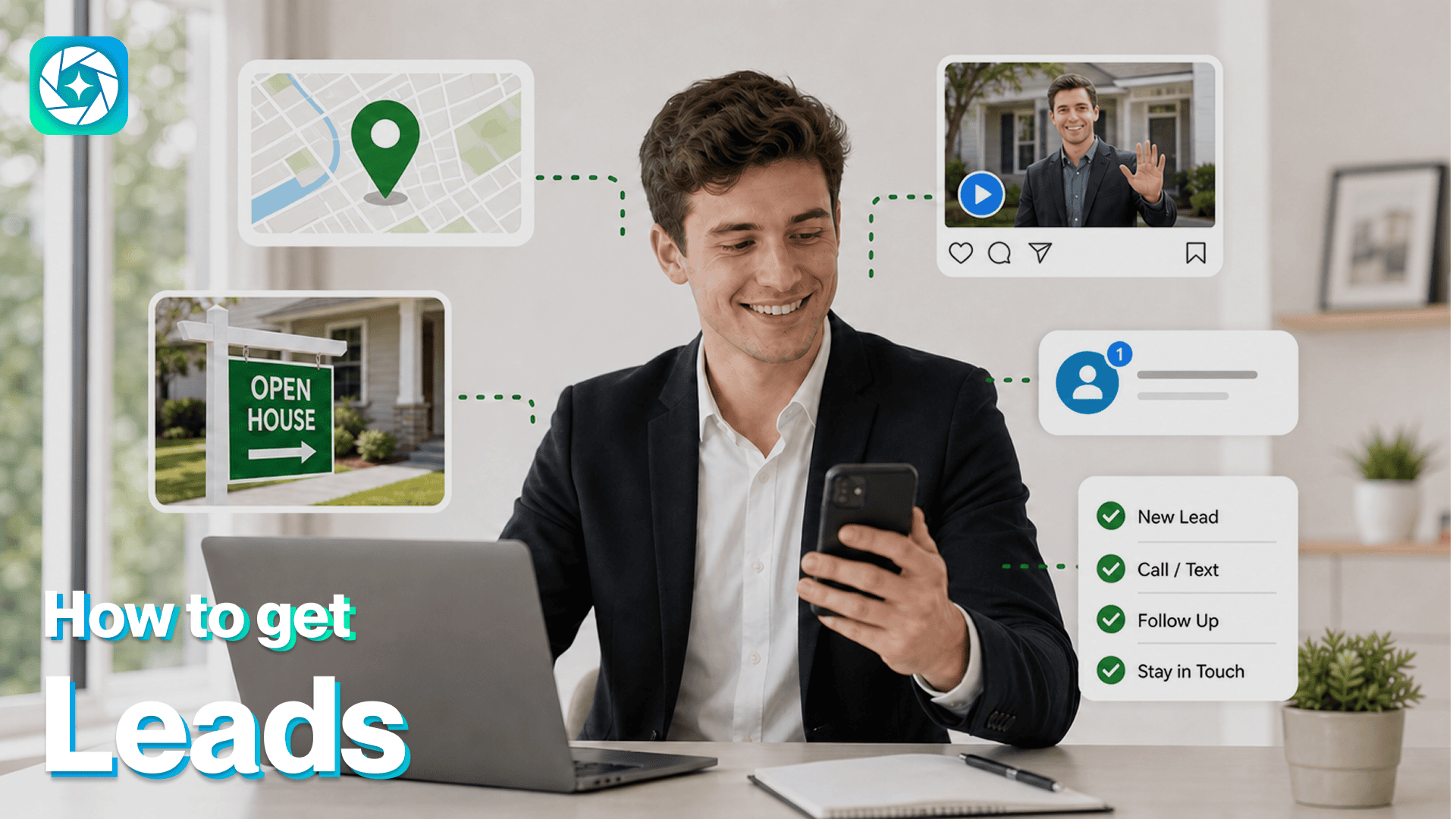
Work one active lead source. That could be an open house, a buyer consultation, a local event, a brokerage lead, or a referral conversation. The point is to create real contact with people who may move soon, not just post content and wait.
Follow up with every warm contact. If someone asks a question, likes a market post, attends an open house, or mentions real estate in conversation, add them to a simple follow-up list. Send a useful message within a day, then check back with something relevant the next week.
A simple week might look like this:
| Weekly action | Goal |
|---|---|
| Contact 10 to 15 people in your sphere | Create more real estate conversations |
| Publish one local content post | Build local credibility |
| Record one short video | Make yourself more visible and trustworthy |
| Attend or support one open house or local event | Meet active buyers or sellers |
| Follow up with every warm contact | Turn interest into pipeline |
This system isn’t flashy, but it gives new agents something measurable to repeat. Over time, the combination of outreach, local content, video, active conversations, and follow-up creates more chances for people to remember you when a real estate need appears.
Use local content to build credibility faster
One of the best forms of real estate lead generation for new agents is local content. This works because local knowledge can create trust before transaction history does.
If you are new, you may not have dozens of closings to point to yet. But you can still demonstrate value by publishing useful information about neighborhoods, pricing shifts, new listings, buyer tradeoffs, or seller preparations.
A short market video about one zip code is more useful than a vague post about “today’s market.” A quick breakdown of what $600,000 buys in one area is more memorable than a generic motivational quote. This is a good way to start separating yourself from agents who only post generic content.
What new agents should avoid
Hide behind preparation
Some agents spend months adjusting their branding, website, and templates instead of talking to people. Branding matters, but conversations matter more.
Sounding too broad
“I help anyone buy or sell anywhere” is forgettable. Clearer positioning is more useful. Even if you stay flexible, your content should still feel local and specific.
Waiting for confidence
Confidence usually comes after repetition, not before it. New real estate agent marketing improves faster when you publish, learn, and refine in public.
Giving up too soon
Content, follow-up, and relationship-based lead generation do not always pay off immediately. But they usually create stronger long-term results than random bursts of activity.
Final thoughts
The real answer to how new real estate agents get leads is not one trick, one platform, or one perfect script. It is a repeatable system built around local credibility, steady outreach, useful content, and better conversion habits.
If you can do those things consistently the no leads phase won’t last that long. The agents who grow fastest are the ones who create more chances to be remembered and more reasons for people to respond.