11 real estate marketing materials every agent should keep in their playbook
Build a stronger real estate marketing playbook with the essential materials every agent needs for listings, lead generation, follow-up, and personal branding.
7 minute read
Real estate marketing materials should do more than make an agent look polished. They should help buyers understand listings faster, help sellers trust the marketing plan, and help past clients remember who to call next.
A better approach is to build a reusable marketing materials. That playbook should cover three jobs: win the listing, market the property, and stay visible after the transaction. Here are the real estate marketing materials every agent should have ready.
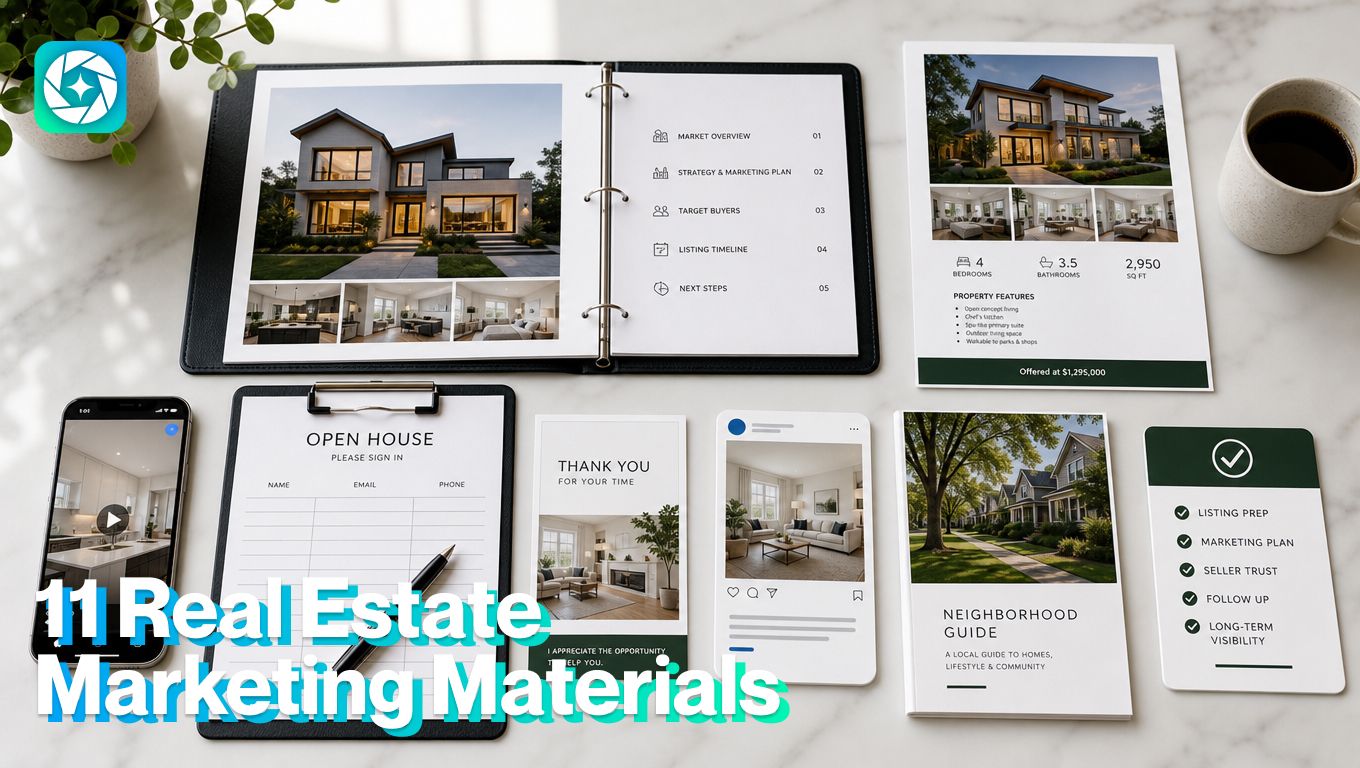
Quick real estate marketing materials playbook
| Marketing Material | Main job | When to use it | Why it matters |
|---|---|---|---|
| Brand kit | Keep the agent recognizable | Before creating any client-facing material | Makes every flyer, video, email, and presentation feel consistent |
| Listing presentation | Win seller trust | Before the listing agreement | Shows the seller how the agent will price, market, and communicate |
| Listing photos | Create first impression | Listing launch | Helps buyers understand the property quickly |
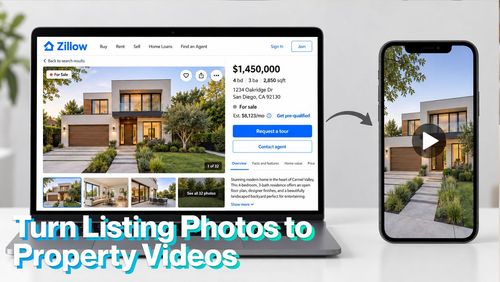
| Listing video assets | Explain flow and create reusable content | Listing launch, social media, email, open house | Turns one listing into multiple marketing assets |
| Property landing page | Give campaigns one destination | Social posts, QR codes, email, paid ads | Makes traffic easier to direct and track |
| Open house materials | Convert visitors into follow-up | Before and during open houses | Helps agents capture leads and guide the next step |
| Buyer and seller guides | Educate clients | Consultations, follow-up, nurture campaigns | Turns agent expertise into something clients can keep |
| Social media templates | Stay visible consistently | Weekly content planning | Saves time and keeps content on brand |
| Email sequences | Improve follow-up | New leads, open houses, post-closing | Keeps conversations from going cold |
| Testimonials and case studies | Prove trust | Listing presentations, website, social, email | Shows results without relying only on claims |
| Local market materials | Show neighborhood expertise | Buyer consults, seller consults, content marketing | Helps agents stand out with useful local knowledge |
1. A clear personal brand kit
Before making flyers, videos, or social posts, agents need a consistent brand kit.
This doesn’t need to be complicated. It should include a logo or wordmark, headshot, brand colors, fonts, bio, contact block, short value proposition, and a few approved phrases that explain what the agent does best. The goal is consistency.
2. A listing presentation for sellers
A listing presentation is one of the most important real estate marketing materials in the playbook because it helps win the client before the property goes live. A strong listing presentation should include local market data, pricing logic, marketing plan, media examples, timeline, communication expectations, and proof from past results.
Include sample listing photos, video examples, social posts, email previews, and open house materials so the seller can picture the full campaign.
3. Professional listing photos
Listing photos are still the foundation of real estate marketing. Bad photos make good homes look average. Strong photos make buyers slow down, click deeper, and book showings with more confidence.
Professional real estate photography ranges depending on property size, market, turnaround time, and extras like drone shots, twilight photos, or virtual staging. Every agent should have a standard shot list, a prep checklist for sellers, and a preferred photography workflow. This keeps quality consistent across listings.
4. Listing video assets
Video should be part of the standard listing package, not an afterthought. A full listing video helps buyers understand flow and layout. Short vertical clips work well for Instagram Reels, TikTok, YouTube Shorts, Facebook, and email. A quick open house video can remind local buyers to attend.
5. Property landing pages
A property landing page gives each listing one clean destination. It should include photos, video, description, price, floor plan if available, showing request button, map, neighborhood highlights, disclosures or documents when appropriate, and agent contact details.
This matters because social posts, QR codes, emails, paid ads, and open house materials all need somewhere to send people. A property page also makes marketing easier to track. Agents can see where traffic is coming from and which campaigns are creating interest.
6. Open house materials
Open house materials should help visitors take the next step, not just walk through the home. At minimum, agents should have a sign-in form, printed flyer, QR code to the listing page, property feature sheet, neighborhood highlights, financing or buyer prep resource, and follow-up message template.
Printed flyers typically cost around $0.50 to $2 each, depending on quality and quantity. They are inexpensive, but they should still be designed well.
7. Buyer and seller guides
Buyer and seller guides are useful because they turn agent expertise into something clients can keep. A buyer guide as a real estate marketing material can explain financing, search strategy, offers, inspections, appraisal, closing costs, and what happens after an offer is accepted.
While the seller guide can explain pricing, prep, staging, photos, showings, offers, inspection negotiations, and closing. These guides don’t need to be long. They need to be clear. A 6-to-10-page guide that answers real client questions is more useful than a bloated brochure no one reads.
8. Social media templates
Agents need social media templates, but not only for “just listed” and “just sold” posts. A useful template library should include listing previews, open house announcements, price updates, market explanations, neighborhood posts, client testimonials, buyer tips, seller tips, and short video covers. Templates save time and keep the brand consistent.
9. Email and follow-up sequences
Email follow-up templates should cover new lead responses, open house follow-ups, seller valuation requests, buyer consultation invites, price reductions, new listing alerts, post-closing check-ins, and referral requests. These messages should sound human. Keep them short, specific, and tied to the client’s situation.
10. Testimonials and case studies
Social proof belongs in more than one place. Agents should collect testimonials, review screenshots, short client quotes, before-and-after stories, and simple case studies. These can be used in listing presentations, websites, social posts, email campaigns, brochures, and buyer or seller guides. A strong case study doesn’t need to reveal private details. It can explain the challenge, strategy, result, and lesson.
11. Local market and neighborhood materials
Local expertise is one of the strongest advantages an agent can show. Agents should have reusable neighborhood guides, monthly market summaries, relocation guides, school-area explainers, commute notes, and local business spotlights. These materials work across blog posts, emails, social media, buyer consultations, and listing presentations.
What to build first
You don’t need to create every real estate marketing material at once. Build the playbook in phases so the most important pieces support your next listing, lead, or client conversation.
If done wrong, everything else is harder to produce later
Start with the core five. These are the materials that make every listing and seller conversation stronger: your brand kit, listing presentation, photography workflow, listing video format, and follow-up templates.
Attention helpers
Then add lead conversion materials. Once the basics are in place, build property landing pages, open house materials, buyer and seller guides, and email sequences.
Extended brand connectors
Finally, add retention and referral materials. Testimonials, case studies, neighborhood guides, market summaries, and post-closing check-ins help you stay visible after the transaction.
A strong real estate marketing playbook should grow in that order: first credibility, then conversion, then long-term visibility.
Final takeaway
The best real estate marketing materials aren’t just pretty. They are practical. They help agents win listings, explain value, market homes clearly, follow up faster, and stay memorable after closing. A strong playbook gives every listing and every client interaction a consistent standard. That is what makes an agent look prepared before the first meeting and professional long after the deal is done.