Camera control in AI video: Why it’s the difference between clips and production
Struggling with random camera movement in AI video? Learn why camera control is critical for continuity, framing, and production-ready results.
4 minute read
Many creators assume the “AI look” comes primarily from faces, textures, or lighting. Those elements matter, but in practice, something else often breaks the illusion first.
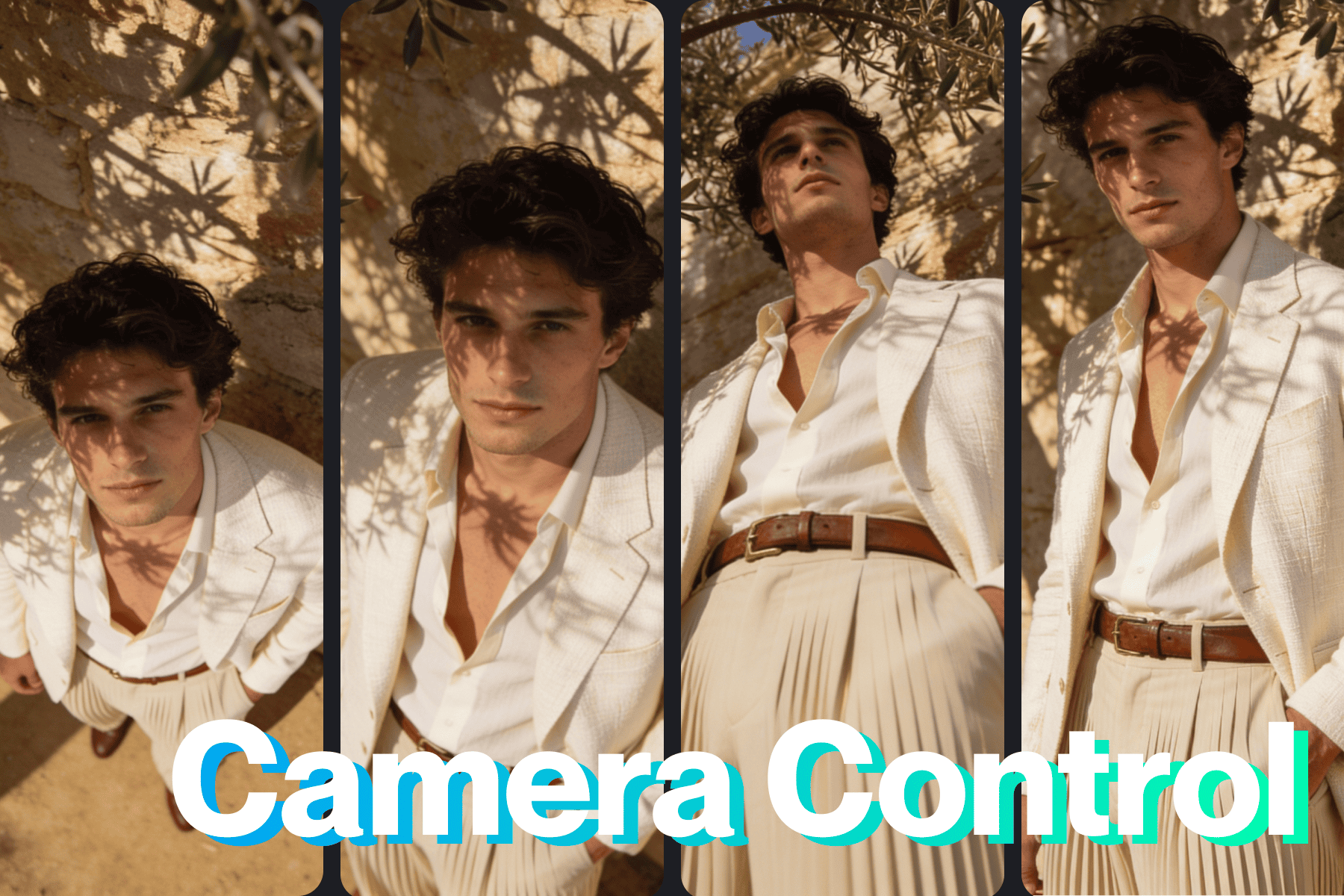
When AI video feels artificial, it is frequently because the camera behaves in ways no human operator would choose. Framing shifts without intent. Movement lacks motivation. Perspective changes subtly between shots. Even when the subject looks convincing, the viewer senses that something is off.
Why AI camera movement feels random
Most generative video systems are optimized to produce visually plausible motion in short bursts. They are not inherently designed to preserve shot logic across time or across scenes.
Several factors contribute to this.
First, prompts are inherently ambiguous when describing spatial intent. A sentence can suggest a “slow cinematic push-in,” but it cannot precisely encode lens choice, movement curve, parallax behavior, and framing persistence all at once.
Second, many systems generate clips in isolation. Each generation starts fresh, without strong memory of previous camera states.
Third, models tend to optimize locally. Making each short segment look plausible on its own, not to ensure that multiple shots behave as part of a coherent sequence.
The result is familiar to anyone working seriously with AI video: motion that looks impressive at first glance but becomes unreliable when used in real edits.
What experienced users try first
When creators encounter unstable camera behavior, they rarely give up immediately. Instead, they start experimenting with increasingly specific prompt language to suppress unwanted motion.
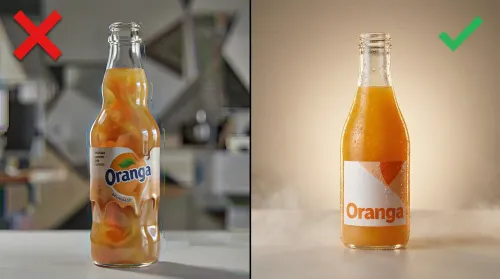
Common tactics include describing the scene “from a stationary viewpoint,” specifying a “fixed vantage point,” or using stability cues such as “locked-off composition.” Many users also learn to avoid the word “cinematic,” since it frequently triggers automatic pans, dollies, or zooms.
However, the results remain inconsistent.
Prompt-level fixes are fundamentally advisory. They can influence motion tendencies, but they cannot guarantee repeatable camera behavior across shots or across projects.
In real production, the camera is structure
In traditional film and video production, the camera is not an afterthought. It is one of the primary tools used to shape meaning, pacing, and continuity.
Camera position defines spatial relationships. Movement defines emotional emphasis. Lens choice influences how subjects are perceived. Shot progression creates rhythm.
Most importantly, camera decisions are repeatable and intentional.
AI video workflows that leave camera behavior largely emergent tend to produce clips that feel visually interesting but editorially fragile. They may work in isolation, but they resist being assembled into longer narratives.
How serious creators regain camera control
As creators push AI video into more demanding use cases, their workflows begin to evolve.
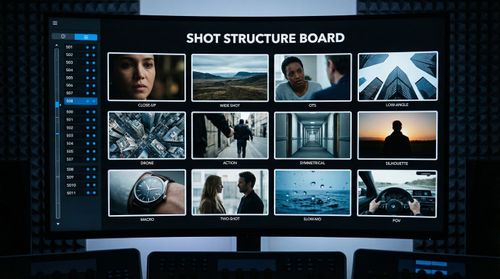
They reduce reliance on pure prompt-driven motion and introduce structural guidance earlier in the process. Reference frames help lock composition. Shot planning defines intent before motion begins. Keyframe thinking limits how much the system can improvise between moments.
The objective is not to eliminate AI variability completely. It is to control where variability is allowed and where it is not.
Where TensorShots fits in this shift
TensorShots is built around the assumption that usable AI video requires more than prompt-level influence over motion. The platform emphasizes structured shot creation, visual anchoring, and direct camera control so that framing and movement can be guided intentionally.
Instead of relying on increasingly complex prompt language to suppress unwanted motion, creators can define and maintain camera behavior directly within the workflow using shortcuts to industry standards in production. This reduces the need for workaround loops, external stabilization tricks, or repeated regeneration cycles.
Conclusion
As long as motion remains loosely defined, even strong generations will struggle to hold together in real-world edits. But when the camera becomes a natively controllable part of the system, AI video begins to cross the line from experimentation into production.