Why most AI video ads fail in the first 3 seconds
Most AI video ads fail before viewers engage. Learn why the first 3 seconds matter and how to structure AI ads for stronger UGC and paid social performance.
4 minute read
AI video generation has improved dramatically. Visual quality is rising, rendering is faster, and more teams are experimenting with AI-powered ad creation.
Many AI video ads look polished but still struggle to stop the scroll. The issue is rarely the model. It is rarely the resolution. And it is almost never the length of the prompt.
Most AI video ads fail because the first three seconds are structurally weak. In paid social and UGC environments, those opening seconds are not just important. They are decisive.
The uncomfortable truth about AI video ads
Scroll-based platforms have changed the rules of video. Viewers are not waiting to be impressed. They are filtering aggressively, making every frame compete with dozens of other stimuli on the screen.
Many AI-generated ads are technically impressive but strategically soft. They open slowly. They establish context too late. From a performance standpoint, the ad has already lost.
Why the first three seconds decide everything
On platforms like TikTok, Instagram Reels, and YouTube Shorts, attention is front-loaded. The viewer decides almost instantly whether a video deserves continued attention.
The first three seconds must accomplish several things at once:
- Establish a clear subject
- Create visual contrast
- Communicate intent
- Signal relevance
If any of these are delayed, engagement drops sharply.
AI workflows often miss this because they optimize for smooth motion or cinematic feel rather than thumb-stop clarity.
What makes a high-performing AI ad hook
High-performing AI ads tend to share a different structure in the opening seconds.
The subject is immediately obvious. Within the first frame, the viewer understands what they are looking at and why it might matter. There is no visual ambiguity competing for attention. Framing is intentional and platform-native. Vertical compositions feel native to mobile environments. The subject occupies meaningful screen real estate rather than floating passively in the frame.
Camera movement, if present, feels motivated and controlled. Many high-performing ads actually begin with relatively stable framing before introducing motion. This can come from color, composition, or subject isolation. The goal is simple: give the viewer a reason to pause.
Why structure beats generation quality
One of the biggest misconceptions in AI advertising is that better models automatically produce better ads.
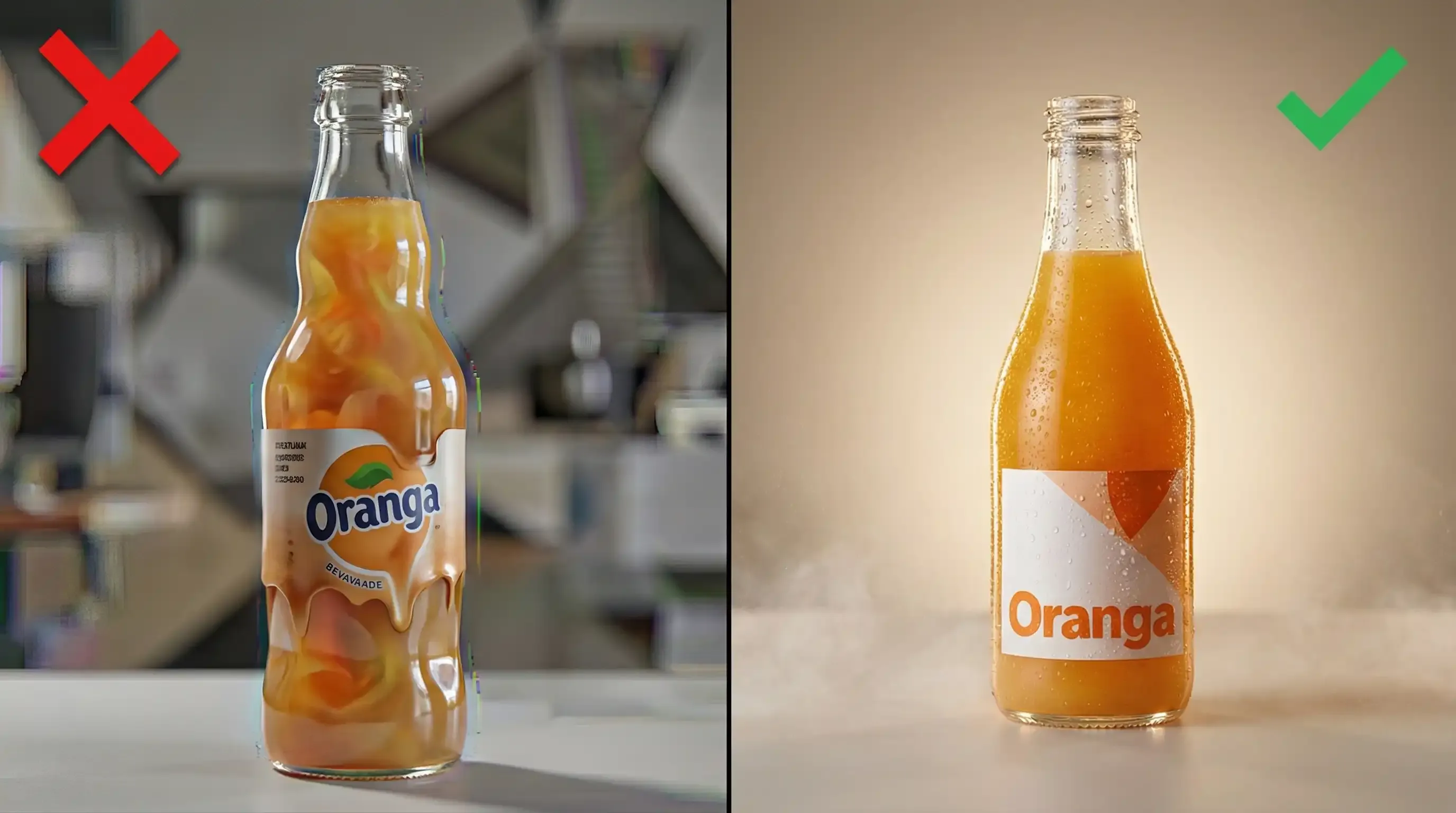
In reality, structural decisions have far more impact on performance than incremental improvements in rendering quality. A perfectly rendered clip with weak visual hierarchy will underperform a simpler clip with a strong hook.
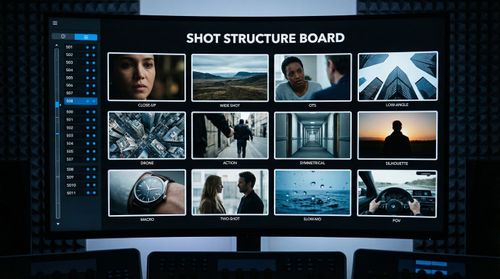
This is why experienced teams increasingly shift their focus upstream. Instead of asking only how to generate better footage, they ask how to design better openings using storyboarding to preserve visual clarity, and to maintain product consistency through the frames.
Where TensorShots fits in the workflow
TensorShots is designed around the idea that high-performing AI ads require structured visual thinking before motion begins.
By combining storyboard planning, visual anchoring, and controlled scene development, the platform allows teams to validate the hook early rather than discovering problems after multiple generations. Creative teams can shape framing, pacing, and visual emphasis before committing to full video output.
This makes it easier to test variations, adapt formats for different platforms, and iterate on ad concepts without constantly rebuilding from scratch.
Conclusion
In modern paid social environments, most viewers decide within seconds whether an ad deserves attention.
AI video tools have made generation faster, but speed alone does not create effective advertising. Ability to control different aspects within your workflow becomes a differentiation factor if your ads work after 500 or less than 20 iterations in total.