AI avatar real estate videos: How to place a presenter in property tours
Learn how agents can use AI avatar real estate videos featuring authorized voices, property-specific scripts, accurate listing details, and responsible disclosures.
8 minute read
A listing video can show the home. It can’t always explain why the layout works, which feature deserves attention, or what viewers should do next.
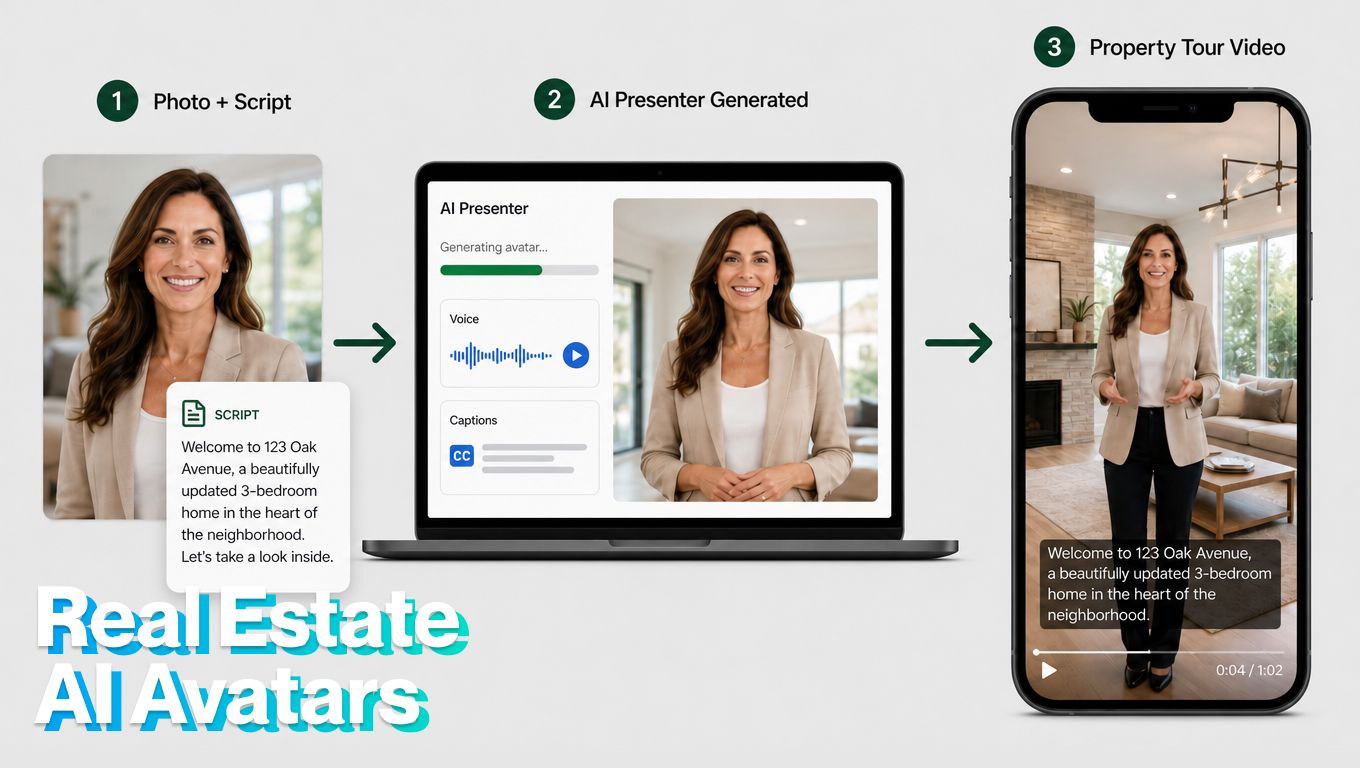
That is where AI avatar real estate videos become useful. An agent uploads a suitable photo, chooses a hook, adds a short script, and uses an authorized voice sample to create a talking AI presenter. The avatar can introduce the property, explain key features, and deliver a call to action without requiring the agent to record every listing video on camera.
What is an AI avatar real estate video?
An AI avatar real estate video combines property media with a digital presenter based on a real person’s image and, when authorized, their voice.
The agent may appear at the beginning of the video, between property scenes, or at the end. The rest of the video can include listing photos, animated camera movement, property details, captions, music, and branding.
This format combines two important elements of real estate marketing: the listing and the professional presenting it.
When to use an AI avatar in a real estate video
An AI avatar works best when the presenter adds useful context, not when it distracts from the property. Use it when the listing needs a clearer hook, explanation, or call to action.
| Use an AI avatar when | Avoid it when | Better alternative |
|---|---|---|
| The video needs a stronger opening hook than text alone can provide | The listing already has strong filmed agent footage | Use the real agent intro |
| The property has features that need explanation, such as layout, upgrades, location, or flexible rooms | The avatar would mostly repeat what viewers can already see | Use captions or a simple listing video |
| The agent wants consistent presence across many listing videos | The avatar likeness or voice isn’t clearly authorized | Record a short real intro or use text overlays |
| The video is for social media, email, property pages, or listing presentations | The MLS placement restricts branding, synthetic media, or presenter-led content | Create an unbranded MLS-safe version |
| The script is short, factual, and tied to the actual listing | The script relies on hype, fake urgency, or unsupported claims | Use a factual voiceover or feature captions |
| The audience needs guidance on what to notice next | The avatar blocks important rooms, views, finishes, or listing details | Use the avatar only at the beginning or end |
| The agent wants multiple versions for different channels or buyer segments | The property need |
Why add a talking AI avatar to property videos?
Most photo-based listing videos depend on text overlays and music. They can present the rooms clearly, but they often lack a recognizable point of view. A talking AI avatar adds that missing layer.
Create a stronger opening
The first few seconds of a social video determine whether viewers continue watching. An avatar can open with a specific reason to pay attention:
“Here is what makes this three-bedroom home different.”
“This may be the best use of outdoor space in the neighborhood.”
“Wait until you see how the kitchen connects to the terrace.”
A spoken hook feels more direct than a generic “Just Listed” title.
Explain what the photos can’t
A wide photograph may show an open-plan room, but the avatar can explain how the kitchen, dining area, and garden connect. The presenter can also clarify that a room could function as an office, point out recent upgrades, or introduce a feature that appears later in the tour.
The script should provide context rather than simply describe what is already visible.
Maintain a consistent agent presence
Recording a new introduction for every listing takes time. Lighting, audio, retakes, and editing can turn a 15-second appearance into a separate production task.
An AI presenter can help agents maintain a consistent visual identity across listing videos, neighborhood updates, open-house announcements, and recently sold posts. It is especially practical for teams managing several properties at once.
Create multiple versions efficiently
The same property can require different messages. Buyers on Instagram may respond to a lifestyle hook, while a LinkedIn audience may be more interested in location, investment potential, or market context.
An avatar workflow allows the agent to change the script without reshooting the full video.
Where should the avatar appear?
A talking avatar should guide the tour, not dominate it. Viewers still came to inspect the property.
The most useful placements are:
The opening hook
Start with the avatar for three to five seconds, introduce the strongest selling point, and then move into the property.
A feature transition
Bring the presenter back briefly before the kitchen, primary suite, garden, or another important area. This works when the feature needs explanation.
The closing call to action
End with the avatar inviting viewers to schedule a tour, attend an open house, request details, or save the property.
For most short videos, one introduction and one closing appearance are enough. Constantly placing the avatar over listing images can obstruct the rooms and make the presentation feel more like an advertisement than a property tour.
How to make the avatar look and sound professional
The quality of the source material affects the result.
Use a front-facing photo with even lighting, a natural expression, and an uncluttered background. Avoid sunglasses, heavy shadows, extreme angles, or images in which part of the face is hidden.
Keep scripts conversational. Short sentences are easier to follow and usually produce more natural speech. Write the way you would explain the listing during a real showing.
Instead of:
“This magnificent and unparalleled residence offers a truly exceptional lifestyle opportunity.”
Try:
“This home combines a flexible layout with direct access to the garden.”
Choose a speaking pace that leaves space for the property. Add synced captions because many people encounter social video without immediately turning on the sound. Background music should become quieter while the avatar speaks and rise again during the property scenes.
Most importantly, review pronunciation. Street names, neighborhood names, architectural terms, and agent names may need phonetic adjustments.
Use real likeness and voice only with permission
AI avatar videos only work if the presenter is used responsibly. If the avatar is based on a real agent, team member, seller, client, or spokesperson, get clear written permission before using their face, likeness, or voice. The same rule applies to voice cloning: use only an authorized voice sample, and make sure the person understands how their voice may appear in listing videos, social posts, ads, emails, and other marketing materials.
Many AI avatar tools include a voice library. These are built-in text-to-speech voices that can narrate a script without copying a specific person’s voice. For most real estate videos, a voice library is the safer default because it avoids the consent and impersonation risks that come with cloning a real person’s voice.
Before publishing, review the full video like any other real estate advertisement. Confirm that the avatar’s script is factual, the voice is authorized, the property claims are accurate, and the final video does not make viewers think a real person said something they did not approve.
Where AI avatar videos fit in real estate promotion
One avatar video can be adapted for several channels:
- Instagram Reels and TikTok: Use a vertical format, a quick property-specific hook, prominent captions, and a concise call to action.
- YouTube Shorts: Lead with a question and direct viewers to the complete tour or listing page.
- Facebook Reels: Emphasize practical features, open-house information, and neighborhood context.
- Property pages: Add a presenter-led overview alongside the conventional photo gallery and listing details.
The script should change with the audience. Reposting the same generic introduction everywhere wastes the flexibility AI avatars provide.
Conclusion
AI avatar real estate videos give agents a practical way to add a recognizable presenter to property content without recording every introduction from scratch. The strongest videos use the avatar for a clear purpose: opening with a relevant hook, explaining something useful, and guiding the viewer toward the next step.