What continuity means in AI video generation (and why it breaks)
Continuity in AI video is often misunderstood. Learn what continuity really means, why it breaks in AI-generated video, and how workflow design solves it.
4 minute read
Continuity is one of the most frequently used and least clearly defined terms in AI video generation.
Creators recognize immediately when continuity is broken, but often struggle to explain why. The noise about characters subtly changing, lighting shifting between scenes, or shots that refuse to stitch together into a coherent sequence is quite pronounced.
Many tools respond by promising better models, but the end result still is confusion.

Continuity existed long before AI
Continuity is not an invention of generative video. It originates in traditional film and animation, where visual consistency is enforced deliberately. Clothing, lighting, camera position, spatial relationships, and motion are all controlled so that shots make sense when viewed together.
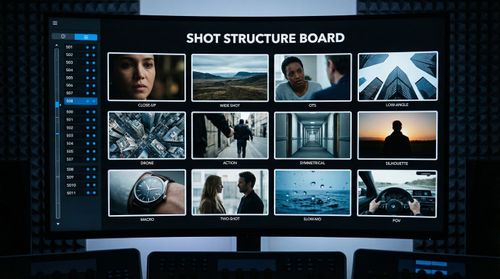
In conventional production, continuity is preserved through planning. Storyboards define shots before cameras roll. Lighting setups are replicated across scenes. Camera positions are logged and reused. AI video generation removes most of these guardrails. Shots are often created independently, with no awareness of what came before or what follows.
The system optimizes itself in isolation, not coherence across time.
Why continuity feels harder in AI video
AI video models excel at producing locally convincing results. A single frame or short clip can look expressive, cinematic, or surreal. The challenge appears when those outputs must function as part of a sequence.
Small variations accumulate. A character’s face shifts slightly. A color palette drifts. Camera perspective changes without intent. None of these issues may be severe on their own, but together they erode the viewer’s sense that the video belongs to one consistent world.
The four types of continuity that actually matter
When content creators say continuity is broken, they are usually referring to one or more of these layers.
- Character continuity: Faces, proportions, clothing, or defining traits subtly change between shots.
- Temporal continuity: Frame-to-frame motion is unstable. Textures shimmer, edges wobble, and objects morph as time progresses.
- Camera and framing continuity: Perspective shifts without intent. Medium shots become wide shots. And the worst problem, camera movement resets between scenes.
- Lighting and style continuity: Exposure, color temperature, and highlights manifests inconsistency.
Most AI tools do not address these layers systematically, as they rely on chance alignment instead of structural control.
Why longer clips do not solve continuity
A common assumption is that continuity problems can be solved by generating longer clips. In practice, this only postpones the issue.
Longer clips still accumulate internal variance. Lighting can drift within a single shot. Motion artifacts compound over time. When the clip ends, the system still has no memory of previous scenes.
Why advanced users stop prompting and start building pipelines
At a certain level of experimentation, experienced users reach the same conclusion: prompts alone cannot enforce continuity.
What emerges instead is a pipeline mindset. Rather than relying on one “magic button,” videographers introduce guide rails that limit how much the system is allowed to change. Identity is anchored. Structure is predefined. Style parameters are held constant across scenes. Some achieve this through custom model tuning, others through structural guidance or frame-level control.
These workflows are often slow and complex, but they work because they treat AI video as a directed process, not a roll of the dice.
What continuity-aware AI systems must do differently
A system designed for real video workflows must treat continuity as a first-class concern.
That means allowing creators to anchor identity early, reuse visual elements across shots, and define structure before generation begins. It means maintaining shared constraints across scenes instead of resetting them on every request.
When continuity is handled at the system level, AI stops behaving like a slot machine and starts behaving like a production tool.
Why continuity matters beyond visual quality
Continuity is not only about aesthetics. It affects trust, clarity, and usability.
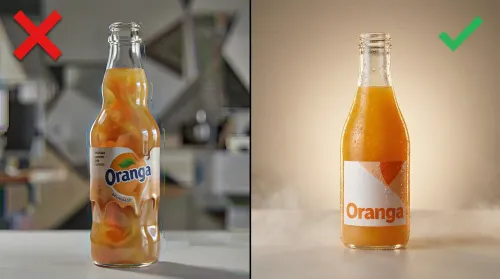
In advertising, continuity ensures products remain recognizable. In UGC-style content, it prevents visual noise that breaks immersion. In branded video, it preserves identity across campaigns.
When continuity fails, creators compensate manually. Time is wasted, costs increase, and AI becomes a liability instead of a multiplier.
Conclusion
Continuity in AI video generation is often framed as a technical limitation. In reality, it is a design and workflow challenge.
Systems that ignore continuity will continue to produce impressive clips and frustrating videos. Systems that treat continuity as a production constraint unlock reliability, scalability, and real-world usability.